
Vietnam Bets on MICE as a New Growth Engine for Tourism and Business
Vietnam – Vietnam is no longer measuring tourism success solely by the number of visitors it attracts. Instead, the country is increasingly focusing on the quality of travelers, the value they generate, and their broader economic impact. At the heart of this strategy lies the rapid development of the Meetings, Incentives, Conferences, and Exhibitions (MICE) sector, which policymakers see as a powerful catalyst for tourism, investment, innovation, and international connectivity.
As global tourism shifts toward higher-value, experience-driven travel, Vietnam is positioning MICE as a strategic pillar capable of elevating the country’s tourism industry and strengthening its role in the global business ecosystem.
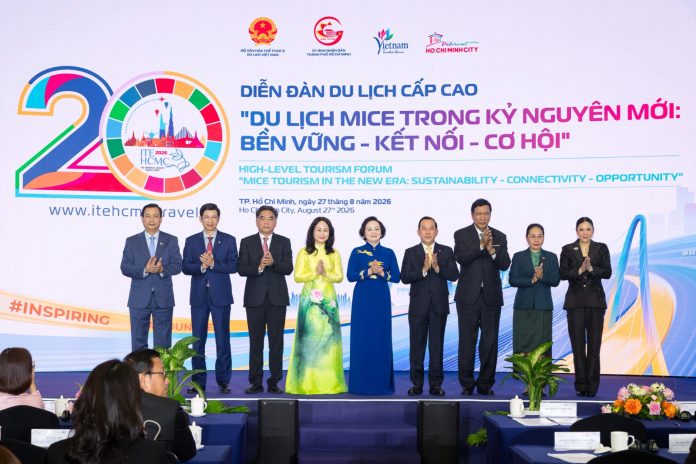
“A destination’s value is measured not merely by visitor volume, but by visitor quality, expenditure levels, length of stay, economic spillover effects, and the knowledge and trade value generated from each journey,” said Nguyen Loc Ha, Permanent Vice Chairman of the Ho Chi Minh City People’s Committee.
According to Ha, MICE is much more than the organization of meetings and exhibitions. It represents the intersection of tourism with trade, investment, science, technology, and innovation, making it one of the most valuable segments of the tourism industry.
For Ho Chi Minh City, MICE development is not simply about attracting larger numbers of international delegates or events. The broader objective is to enhance the city’s competitiveness and strengthen its standing within regional and global MICE networks.
This commitment is reflected in the city’s adoption of Resolution No. 62/2025/NQ-HDND, a policy framework designed to support businesses and visitor groups participating in MICE activities and to create favorable conditions for the sector to become a core pillar of the local tourism economy.
Responding to a Changing Global Tourism Landscape
The growing emphasis on MICE comes at a time when global tourism is undergoing significant transformation.
According to Lam Thi Phuong Thanh, Vietnam’s Minister of Culture, Sports and Tourism, travelers today are seeking more personalized experiences, technology-enabled services, wellness-focused offerings, authentic cultural engagement, and sustainable tourism options. As a result, destinations are increasingly competing on service quality, innovation, and connectivity rather than on natural attractions or pricing alone.
“Destinations are no longer competing solely on the basis of natural resources or price; instead, they are competing through service quality, innovation capacity, connectivity, and their ability to create distinctive value,” Thanh said.
Against this backdrop, MICE has emerged as one of the most strategic tourism segments capable of driving the transition from quantity-based growth toward sustainable, high-value development.
The numbers illustrate the sector’s growing importance. International research organizations project the global MICE and business travel market to exceed US$1.8 trillion in 2026 and reach approximately US$2.4 trillion by 2031.
One of the sector’s major advantages is its economic impact. MICE travelers typically spend between three and six times more than leisure tourists, stay longer, and generate demand across a broad range of industries, including aviation, accommodation, transportation, food and beverage, technology, communications, and logistics.
In Vietnam, the MICE market is approaching US$6 billion, contributing significantly to the country’s tourism revenues while creating valuable opportunities for investment, business networking, and destination branding.
Building an Ecosystem, Not Just Hosting Events
While the opportunities are considerable, industry leaders stress that sustainable growth in MICE requires collaboration across multiple sectors.
Ha argued that the competitiveness of a MICE destination ultimately reflects the management and organizational capacity of an entire city. Therefore, success depends on close cooperation between government agencies, airlines, hotels, convention centers, event organizers, service providers, and local communities.
“We must shift from a mindset of ‘attracting individual events’ to ‘building a MICE destination brand,’ and from mere competition between destinations to enhanced linkages that collectively expand the market and boost regional competitiveness,” he said.
To achieve this, the Vietnamese government aims to develop a highly integrated MICE ecosystem connecting local authorities, travel companies, professional conference organizers (PCOs), destination management companies (DMCs), technology providers, logistics firms, and cultural and culinary sectors into a unified value chain.
A Green and Digital Future
Digital transformation and sustainability are emerging as key pillars of Vietnam’s MICE development strategy.
The Ministry of Culture, Sports and Tourism plans to introduce a national Green MICE framework aligned with standards established by the Global Sustainable Tourism Council (GSTC). Hotels, convention centers, and event organizers will be encouraged to adopt ESG practices, measure carbon emissions, and implement environmentally responsible operations.
At the same time, advanced technologies such as artificial intelligence (AI), big data, virtual reality, and digital platforms are expected to redefine how events are organized and how destinations engage with visitors.
“Emerging technologies, including artificial intelligence (AI), big data, virtual reality and digital platforms, will not only transform the way events are organized, but also reshape how we engage with customers, manage destinations and measure the value generated by MICE activities,” Thanh said.
The government also plans to strengthen international-standard workforce development programs, focusing on management capabilities, digital competencies, language proficiency, and event management expertise.
Government Support and Long-Term Vision
Vietnam’s commitment to MICE development has received strong backing at the highest levels of government.
Pham Thi Thanh Tra, Deputy Prime Minister of Vietnam, described MICE as one of the key drivers of global tourism growth because of its ability to promote investment, trade, innovation, scientific cooperation, and cultural exchange.
“Vietnam does not only want to host large events. Vietnam wants to become a reliable partner and a responsible member. We want to actively help shape the future of the global MICE industry—greener, smarter, more creative, and more sustainable,” she said.
To realize this vision, the government is focusing on five strategic priorities: improving policies and administrative procedures, developing world-class MICE infrastructure, accelerating digital and green transformation, enhancing workforce quality, and strengthening international partnerships.
Major destinations including Ho Chi Minh City, Hanoi, Da Nang, Quang Ninh, Khanh Hoa, and Phu Quoc are expected to play central roles in Vietnam’s national MICE strategy, supported by upgraded transport infrastructure and modern convention facilities developed through both public and private investment.
Beyond Events: Showcasing Vietnam to the World
Ultimately, Vietnam’s ambitions extend beyond becoming a venue for major conferences and exhibitions. Policymakers see every international event as an opportunity to showcase the country’s culture, heritage, cuisine, people, and economic achievements.
“We do not simply want MICE visitors to come to Viet Nam to attend an event; we want them to stay because of the experiences they discover, and return because of their affection for the destination,” Thanh said.
With supportive policies, infrastructure investments, digital innovation, and a growing commitment to sustainability, Vietnam is increasingly positioning itself not only as a host for world-class events, but as one of Asia’s most competitive and forward-looking MICE destinations for the years ahead.


